What is the MCCPS System?
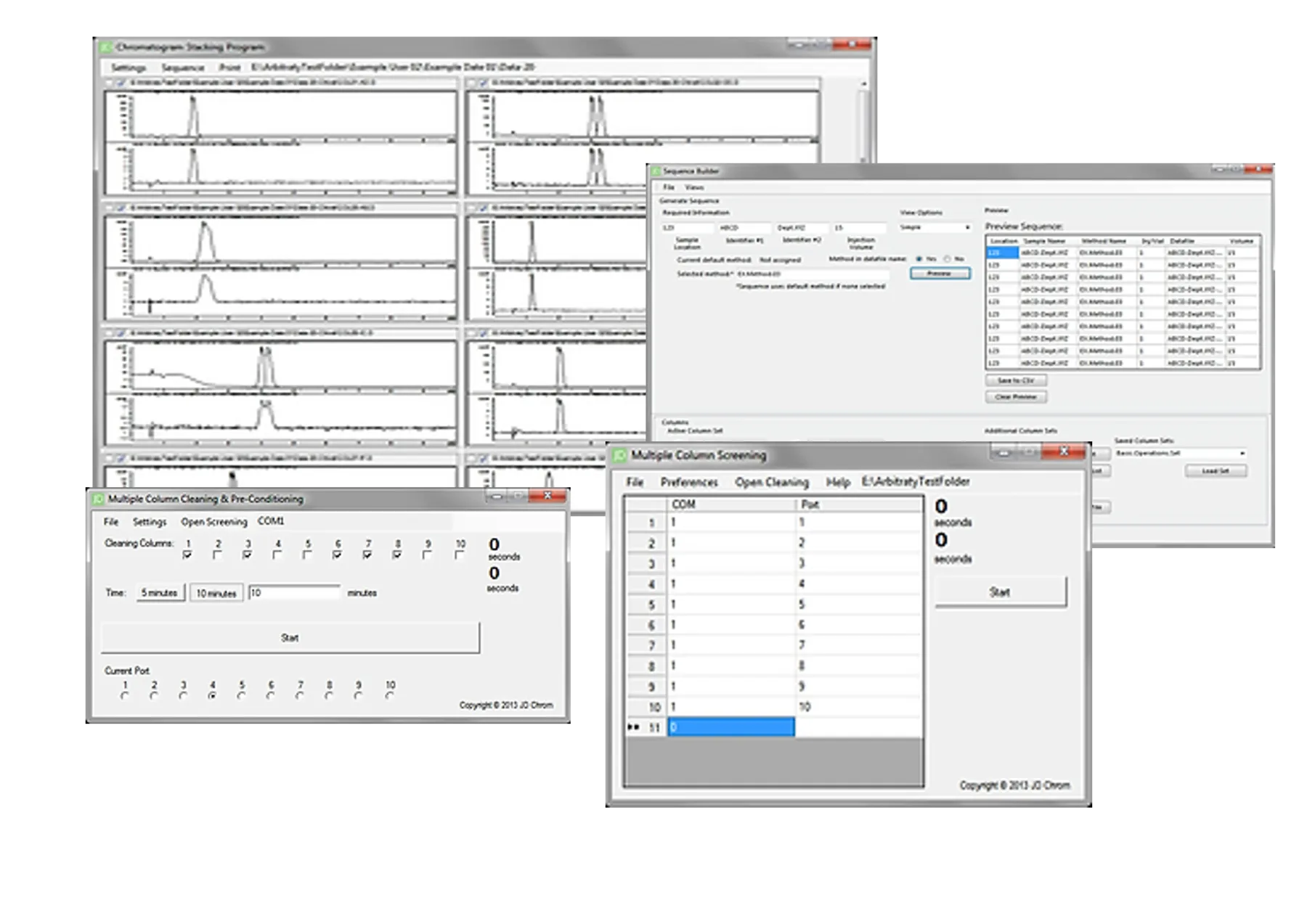
The MCCPS System is a bundle of products designed to automate a large part of the method development process so you can focus on other matters. It includes:
- The Column Selector Unit enables automation of the column switching process.
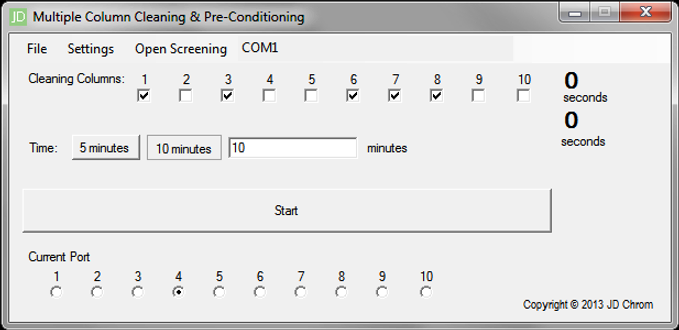
- The MCCP Program configures and controls the column cleaning & pre-conditioning process.
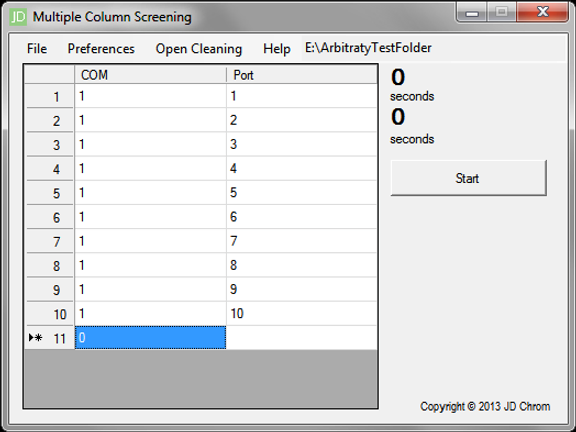
- The MCS Program configures and controls the column screening process.
Automation and task specialization bring a two-phase method development process:
Phase 1
Cleaning & pre-conditioning
Every column processed in one continuous run, no sample injections.
Phase 2
Screening
Your sample injected through each column in sequence, automatically.
The MCCPS System can change the way you conduct method development in your lab:
- Increased efficiency
- Savings in samples, solvents and time
- Increased user productivity: fewer mundane tasks, fewer distractions, and an expanded (rather than fragmented) work flow
Let's make a comparison
Conventionally
The method development process involves many mundane tasks that need just enough attention to pull your focus from other things, usually because columns are tested one at a time. Common, and sometimes costly, annoyances include:
- Switching out columns: fumbling with frits, ferrules and leaks
- Sore fingers
- Damage from over-tightening
- A fragmented work flow. Unless you sit in front of the machine for the entire method, your attention is elsewhere, and returning may take longer than the method itself, leaving the machine idle.
Without buying a relatively expensive column selector, users have accepted the first three annoyances. To handle the efficiency lost to a fragmented work flow, users commonly inject a sample three times:
- To equilibrate the column
- To inject the sample
- To confirm the results of the second injection
Unfortunately, this approach does not make the most efficient use of samples and mobile phase.
With the MCCPS System
Method development benefits from automation and task specialization. The mundane tasks that used to distract you are handled autonomously by the Column Selector Unit and software:
- Up to ten columns are picked and analyzed in one broad screening endeavor.
- The high-capacity Column Selector Unit greatly reduces the need to switch out columns. Most labs have a small set of columns that separate a large share of their samples; once installed, these rarely need exchanging.
- Phase 1, specialized and automated cleaning & pre-conditioning, removes the need to inject samples (saving samples and solvents) and processes all ten columns in a single continuous run.
- Phase 2, specialized and automated screening, makes the most efficient use of the sample injected into each column and runs it through all ten columns in one continuous process.
Let's look at an example
To show the productivity gains from specialization and automation, assume the following (all times in minutes):
- 10 columns to be cleaned, pre-conditioned and screened
- A 5 minute per column cleaning & pre-conditioning method
- A 20 minute per column screening method (sample injection)
- D = distraction cost: the cost of putting everything down and returning to the HPLC System
| Minutes | Task |
|---|---|
| 2 | Column setup |
| 63 | Sample analysis |
| 1 | Configure method |
| 2 | System startup (reaching method parameters) |
| 20 | Injection: cleaning & pre-conditioning |
| 20 | Injection: analysis |
| 20 | Injection: analysis confirmation |
| 1 | Column removal |
| D | Distraction cost |
| 66 + D | Per column, × 10 columns |
Final total
660 min + 10D
11 hours + 10 distraction costs
| Minutes | Task |
|---|---|
| 20 | Column setup (2 min × 10 columns) |
| 53 + D | Column cleaning & pre-conditioning |
| 1 | Configure C&P run |
| 2 | System startup |
| 50 | Specialized C&P (5 min × 10 columns) |
| D | Distraction cost |
| 203 + D | Column screening |
| 1 | Configure screening run |
| 2 | System startup |
| 200 | Specialized screening (20 min × 10 columns) |
| D | Distraction cost |
Final total
276 min + 2D
4 hours 36 minutes + 2 distraction costs
First, compare total process times
In system process times alone, the MCCPS System completes the screening process 6 hours 24 minutes faster than conventional method development, with 5 times fewer distraction costs.
Distraction cost is the cost of putting all other tasks down to return to the HPLC System and continue method development. It can be as trivial as a delayed lunch or as significant as a missed business meeting. In time alone, 10 distraction costs are 10 occasions where the system may sit idle while you return from whatever else has your attention. If one thing leads to another, a screening process like this can take another day, or a week, to finish.
The MCCPS System cannot control how large each distraction is, but an 80% reduction in their number contributes directly to shorter total process times.
Future process times are also 20 minutes shorter, since every column is already installed on the Column Selector Unit. If a column needs replacing, allow about 3 extra minutes per column.
Second, compare work flow
Using distraction cost as a marker of a break in work flow, the two approaches have very different profiles. Conventional method development is broken into consistent segments of about 1 hour, whereas the MCCPS System has one segment of about 1 hour followed by one of about 3.3 hours.
After the first hour, the MCCPS System expands your work flow by roughly 300%, so you can use that time productively while the machine continues processing the columns.
Additional benefits
- Opens up lab space, with one of the smallest lab footprints for a column selector
- Sharper peaks from minimal band broadening, thanks to shorter tubing between the HPLC System and the Column Selector Unit
- The least expensive column selector system on the market, yet with the added functionality of the MCCP and MCS Programs, for the greatest return on your investment